It is also an agonist of the serotonin 5-HT1A and 5-HT7 receptors, an antagonist of the serotonin 5-HT5A and 5-HT7 receptors, and a ligand of the serotonin 5-HT6 receptor. It shows high affinity for the serotonin 5-HT2 receptors, with Ki values ranging from 2.0 to 184 nM. (+)-JRT is highly selective for a subset of serotonin receptors and does not bind to various dopamine, adrenergic, or histamine receptors, which is in contrast to LSD. It has significant but reduced psychedelic-like effects compared to LSD in animals. Since the late 1980s, there has also been a revival of hallucinogen research more broadly, which, in recent years, has included preclinical and clinical studies involving LSD and other compounds such as members of the 2C family compounds and psilocybin.
In clinical research settings, precautions including the screening and preparation of participants, the training of the session monitors who will be present during the experience, and the selection of appropriate physical setting can minimize the likelihood of psychological distress. Bad trips can be connected to the anxious ego-dissolution (AED) dimension of the APZ questionnaire used in research on psychedelic experiences. Individuals who have psychedelic experiences often describe what they experienced as “more real” than ordinary experience. Some research has found similarities between psychedelic experiences and non-ordinary forms of consciousness experienced in meditation and near-death experiences. Some researchers have questioned the interpretation of the results from these studies and whether the framework and terminology of mysticism are appropriate in a scientific context, while other researchers have responded to those criticisms and argued that descriptions of mystical experiences are compatible with a scientific worldview. The revised version of the Mystical Experience Questionnaire, for example, asks participants about four dimensions of their experience, namely the “mystical” quality, positive mood such as the experience of amazement, the loss of the usual sense of time and space, and the sense that the experience cannot be adequately conveyed through words.
Psychedelics
The therapist is present during the peak of the experience to assist the patient in processing material that arises and to offer support. Dialogue with the therapists the drug session(s) but essential during the preparation session before and the integration session afterwards. In a prior 2014 study, researchers explored the relationship between recidivism and naturalistic hallucinogens in criminal justice populations with a history of substance use. In 2017, researchers mainly from the University of Birmingham published research suggesting that psilocybin use is correlated with reduced criminal behavior. Findings include that LSD may be less tolerable than psilocybin due to more potential exacerbations of anxiety and OCD symptoms.
Rodney King Was On PCP At The Time Of His 1991 Beating And Arrest
On April 19, 1943, Hofmann ingested 0.25 milligrams (250 micrograms) of the substance, which he estimated to be a small dose, but is actually about 10 times the minimum amount that produces a psychedelic effect. Harvard University psychologists Timothy Leary and Richard Alpert (who is now known as Ram Dass) were two of the most well-known psychedelic drug researchers during this time period. LSD (lysergic acid diethylamide) is a powerful hallucinogenic drug that alters mood, perception, and thought. A bad trip can happen to anyone, especially if you take LSD in high doses. But it belongs to the same class of drugs — ergolines — that treats migraine and Parkinson’s disease, though its effects on the brain are very different.
The CIA operated using front organizations, although some top officials at these institutions were aware of the CIA’s involvement. Additionally, other methods beyond chemical compounds were used, including electroshocks, hypnosis, sensory deprivation, isolation, verbal and sexual abuse, and other forms of torture. Dissociative Agents Psychedelic substances which may have therapeutic uses include psilocybin, LSD, and mescaline. Many psychedelic bands and elements of the psychedelic subculture originated in San Francisco during the mid to late 1960s.
Early Life
LSD (lysergic acid diethylamide), also called “acid,” is a type of synthetic and mind-altering substance (psychedelic). Lysergic acid diethylamide, commonly known as LSD (from German Lysergsäure-diethylamid) and by the slang names acid and lucy, is a semisynthetic hallucinogenic drug derived from ergot, known for its powerful psychological effects and serotonergic activity. One critical pioneer in that movement was Augustus Owsley Stanley III, a California-based underground chemist who manufactured several million doses of the drug. Mood shifts, time and space distortions, and impulsive behaviour are especially hazardous complications to an individual who takes the drug.
Millbrook And Psychedelic Counterculture (1963–
Insects, including flies and moths, carry conidia of Claviceps species, but it is unknown whether insects play a role in spreading the fungus from infected to healthy plants. LSZ has been patented as a potential anti-inflammatory drug by Charles D. Nichols and colleagues. It is known to have been produced and sold by the now-defunct psychedelic lysergamide manufacturer Lizard Labs in the 2010s and 2020s. LSZ was first definitely encountered as a novel designer drug, in Europe, in December 2013. There have also been rumors for many years that LSZ was distributed for a time on blotter paper under the name “λ” (“lambda”), though this has likewise not been confirmed.
Therapeutic Effects
- In terms of subjective effects, LSD may be described as possessing the visual and mental content of psilocybin or DMT along with the “dopaminergic edge” of a classical stimulant such as amphetamine or methylphenidate.
- Aside from these superficial similarities, the two plants are not related, do not resemble one another, and are very unlikely to be confused.
- Highly selective serotonin 5-HT2A receptor agonists have recently been developed and show stimulus generalization to psychedelics, whereas selective serotonin 5-HT2C receptor agonists do not do so.
- Pickard and Skinner had high expectations for the drug and intended to produce and distribute it as an LSD alternative, but had difficulty scaling its synthesis due to high production costs and low yields.
Their activities, including cross-country trips in a psychedelically-decorated bus and interactions with major figures of the beat movement, were later documented in Tom Wolfe’s The Electric Kool-Aid Acid Test (1968). He said this would be a threshold dose based on the doses of other ergot alkaloids. In the 1960s, LSD and other psychedelics were adopted by and became synonymous with the counterculture movement due to their perceived ability to expand consciousness. LSD was the 25th of various lysergamides Hofmann synthesized from lysergic acid while trying to develop a new analeptic, hence the alternate name LSD-25. Swiss chemist Albert Hofmann first synthesized LSD in 1938 from lysergic acid, a chemical derived from the hydrolysis of ergotamine, an alkaloid found in ergot, a fungus that infects grain. They are lower-efficacy serotonin 5-HT2A receptor partial agonists and can notably act as hallucinogen antagonists against LSD.
Art And Music
A group of researchers concluded in a 2011 study that psilocybin “occasions personally and spiritually significant mystical experiences that predict long-term changes in behaviors, attitudes and values”. More rarely, psychedelic experiences can include complex hallucinations of objects, animals, people, or even whole landscapes. Despite several attempts that have been made, starting in the 19th and 20th centuries, to define common phenomenological structures of the effects produced by classic psychedelics, a universally accepted taxonomy does not yet exist. Researchers have interpreted psychedelic experiences in light of a range of scientific theories, including model psychosis theory, filtration theory, psychoanalytic theory, entropic brain theory, integrated information theory, and predictive processing.

- In 1989, they appeared together on stage in a dialog called The Inner Frontier hosted by the Association for Consciousness Exploration, the same group that had hosted Leary’s first Cleveland appearance in 1979.
- However if LSD is used daily for several days tolerance to its hallucinogenic effects will build up, meaning a user requires larger doses of LSD to achieve the same result.
- They disclosed that they had unsuccessfully lied to the court in an attempt to exploit a legal loophole and avoid conviction and prison time, which they regretted.
- During the 1960s LSD (“acid”) became popular within the hippie subculture that emerged in the United States and western Europe.
- There is also evidence which suggests serotonergic psychedelics can exacerbate certain mental health conditions such as schizophrenia.
In response to this, the Multidisciplinary Association for Psychedelic Studies (MAPS) was founded by Rick Doblin in 1986 and began efforts to develop MDMA and other psychedelics as medicines. Notable major examples of these drugs have included the DOx psychedelic DOM, the 2C psychedelic 2C-B, and the MDxx entactogen MDMA, among others. Many ergolines and lysergamides act as highly promiscuous ligands of monoamine receptors, including of serotonin, dopamine, and adrenergic receptors. Many tryptamines act as non-selective serotonin receptor agonists, including of the serotonin 5-HT2A receptor.
LSD, through its binding to cortical 5-HT2A receptor, may enhance excitatory neurotransmission along frontostriatal projections and, consequently, reduce thalamic filtering of sensory stimuli towards the cortex. In particular, increased connectivity and activity were observed in regions with high expression of 5-HT2A receptor, while a decrease in activity and connectivity was observed in cortical areas that are dense with 5-HT1A receptor. These modifications spatially overlap with the distribution of serotonergic receptors. Neuroimaging studies using resting state fMRI recently suggested that LSD changes the cortical functional architecture.
It detailed his experience traveling to Oaxaca, Mexico, and taking “magic mushrooms” (psilocybin) within the cultural practices that started the “trip” experience. A resurgence of public interest in psychedelic drug therapy in the 21st century has been driven in part by articles in The New Yorker, The New York Times, and The Wall Street Journal. Observers note that the pressure to deliver returns to shareholders could lead to expedited clinical trials, underreporting of adverse effects, or the commercialization of unproven therapies.
Full agonists and partial agonists above this threshold are psychedelic 5-HT2A receptor agonists, whereas partial agonists below this threshold, such as lisuride, 2-bromo-LSD, 6-fluoro-DET, 6-MeO-DMT, and Ariadne, are non-hallucinogenic 5-HT2A receptor agonists. Interestingly, Gq signaling appeared to mediate hallucinogenic-like effects, whereas β-arrestin2 mediated receptor downregulation and tachyphylaxis. Moreover, the HTR paradigm is one of the only animal tests that can distinguish between hallucinogenic serotonin 5-HT2A receptor agonists and non-hallucinogenic serotonin 5-HT2A receptor agonists, such as lisuride. Similarly to the findings with a strong CYP2D6 inhibitor, a pharmacogenomic clinical study with LSD found that LSD levels were 75% higher in people with non-functional CYP2D6 (poor metabolizers) compared to those with functional CYP2D6. Some psychedelics are substrates of cytochrome P450 (CYP450) enzymes, for instance LSD being a substrate of CYP2D6 as well as of several other CYP450 enzymes. The extent to which psilocin (and by extension psilocybin) is metabolized by MAO, specifically MAO-A, is not fully clear, but has ranged from 4% to 33% in different studies based on metabolite excretion.
Lysergic Acid

New clinical LSD experiments in humans started in 2009 for the first time in 35 years. By the 1960s however, controversies surrounding “hippie” counterculture began to deplete institutional support for continued studies. In Canada, Humphry Osmond and Abram Hoffer completed LSD studies as early as 1952. In the 1950s and 1960s, it was used in psychiatry to enhance psychotherapy, known as psychedelic therapy.
Of particular interest was “blocking” the psychotic state by administration of drugs, as this was seen as a promising development in the treatment of mental illness. Some people report changes in perception of self and the universe producing profound and life-changing spiritual experiences. The effects of LSD also depend on the amount taken; the user’s personality, mood, and expectations; and the surroundings in which the drug is used. First synthesized by Albert Hoffman in 1938 LSD is the archetypal psychedelic (literally “soul-opening”) drug. Testing kits are considered vital because the common mimics have significantly worse safety profiles than LSD, including the risk of physical overdose and death.citation needed However, higher doses increase the risk of adverse psychological reactions such as anxiety, paranoia, panic attacks, delusions, psychosis, and, in rare cases, seizures.
LSD was declared a “Schedule I” substance, legally designating that the drug has a “high potential for abuse” and is without any “currently accepted medical use in treatment.” LSD was removed from legal circulation. Eight subjects received a full 200-microgram dose of LSD while four others received one-tenth as much. By the end of the 20th century, there were few authorized researchers left, and their efforts were mostly directed towards establishing approved protocols for further work with LSD in easing the suffering of the dying and with drug addicts and alcoholics. Scientific study of LSD largely ceased by about 1980 as research funding declined, and governments became wary of permitting such research, fearing that the results of the research might encourage illicit LSD use.
For Treatment Providers
Sometime from the 3rd to the night of the 4th, he was duct taped around his head, and with his hands behind his back. Green would be tortured for six days, and the timeline of events was constructed later via witness testimony. Skinner believes that Green stuck around because he could inform to the DEA; he had been recently arrested on a drug charge in Lebanon, Missouri. She said that Skinner had been keeping her drugged, threatened her into marrying him.
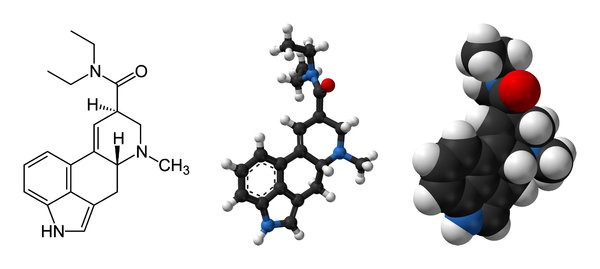
LAMPA appears to be significantly less potent than LSD in humans, producing little to no noticeable effects at doses of 100 μg. There has also been further investigation into LSD’s impact on the brain and cognition, with studies showing how psychedelics engender neuroplasticity and work to downregulate the default mode network. Hoffman noticed a shift in his conscious experience after the LSD entered his system and a few days later he decided to intentionally ingest the psychedelic substance to further explore the effects. While the government admitted it was, at that time, drugging people without their consent and that Ritchie’s behavior was typical of someone on LSD, U.S. District Judge Marilyn Hall Patel found Ritchie could not prove he was one of MKUltra’s victims or that LSD caused his robbery attempt, and dismissed the case in 2005. even believe that an emetic chemical is purposely added to the seeds to prevent people from ingesting them, but that has never been proven.citation needed One 1964 article states that reported adverse effects must come from the seeds, as the stated insecticide is too “inocuous” to humans to be responsible. A study gave mice 3000 mg/kg with no lethal effects.citation needed}