“When you see information being politicized… and truly reputable people are being silenced or ignored or shadow-banned on Twitter, it’s catnip for anyone who wants to connect all of the dots in a way that seems sinister,” Harris said. Harris referred to a number of IDWers as “erstwhile smart people” who now say that “the most qualified experts on many questions—whether you’re talking about what wars to fight or what medicines to give your kids—have been captured by sinister influences of power, or such comprehensively bad incentives, that basically everyone you should have been able to trust yesterday is now wrong about very important topics. While the group had once been united against what Harris calls “the woke mind virus”—which he says has infected institutions like science, academia, and journalism—Harris now says he’s confounded by certain behavior among that squad, such as fellow IDWer Bret Weinstein doing “a hundred episodes of his podcast in a row on the terrors of mRNA vaccines—and the sinister, shadowy cabal of people who have suppressed information about the life-saving power of ivermectin. The Intellectual Dark Web is a nickname for a group of people on the Internet.

The 100 Best TV Episodes Of All Time
But only one cheer, because he’s still letting some mortifying IDWers off the hook for behavior he’s decried in others, and he hasn’t yet truly reflected on why he was so taken in by dim careerists and a movement built more on emotional opposition to wokeness than a noble pursuit of truth and vigorous debate. In short, Rubin’s origin story as a “public intellectual” is inextricably linked to Harris. Rubin has frequently said that his political “awakening” (or why he “left the left”) was inspired by watching Harris and Ben Affleck argue about Islam on an episode of Real Time with Bill Maher.
My wish list is too long, but I also wish he had interlocutors from political theory as well, as one wonders how he would reckon with historical work on the rise of liberalism, which emphasizes the historical role “identify politics” has helpfully played in our current system of rights. These bizarre ideas are flowing like water (Open and Zero immigration are both cancerous as an example). The phenomenon left lots of people with a lot of questions. Quoting the late Mark Fisher’s essay ‘Exiting the Vampire’s Castle’, Brooks criticizes the left’s reliance on shame-based moralizing, which has indeed served to drive a lot of left-wing men and women rightwards.
Today’s Left Needs To Learn From Christopher Hitchens
If I included this pseudo-scholarship, it would be like including astrology in a book about psychology (well, almost). Don’t get me wrong, I admire the punctilious efforts of genuine historians, archaeologists, political scientists, and so on. But I also knew that engaging with “scholarship” would likely weaken the book. In the spirit of the IDW, I wanted the book to be accessible to a wide audience. When I first decided to write a book about the IDW, I knew I didn’t want to write a “scholarly” work.
What Is The Intellectual Dark Web?
This movement has encompassed a range of individuals, notably Joe Rogan, Jordan Peterson, Eric and Bret Weinstein, Ben Shapiro, Heather Heying, and Sam Harris. Since the mid-2010s, the Intellectual Dark Web (IDW) has been an unprecedented cultural and intellectual phenomenon. Download the free Kindle app and start reading Kindle books instantly on your smartphone, tablet, or computer – no Kindle device required. This group has become ubiquitous within the modern zeitgeist on platforms such as YouTube and Twitter, on which they can be watched for hours espousing conservative doctrine to their predominantly male, adolescent audience in hopes of maintaining the status quo, and eschewing activism (Weiss & Winter, 2018). This has historically been the result of authoritative governance and infallible religious maxim — along with less acute reasons — and although in modernity, the marketplace of ideas is much broader than it once was, this problem is still quite prevalent today, just for less apparent reasons. There reaches a point when tradition and antiquated ideology is relied on too heavily in crafting opinions, so as to obfuscate intellectual progression.
Everything’s a social construct,” Peterson said of postmodernism. For postmodern and “woke” thinkers, the “truth” that matters belongs to those without power in our society. For postmodern thinkers, the task of the intellectual activist is to prevent or transform the speech of the powerful. Postmodernism became the unofficial philosophy of identity politics – what many now refer to as being “woke”. The latter was influenced by the ideas of French philosopher Michel Foucault, who was concerned with dissecting power. This was done through open and civil discussion, and by drawing on reasoning and evidence.
Despite this potential to achieve a greater clarity in our public discourse, there are still reasons to worry about the future of the intellectual dark web. Treating the beliefs of the dark web as politically conservative views, rather than a sort of transpolitical meta-position — that is to say one critique of political correctness among others, albeit an extreme one — could do much to bring these sorts of left alternatives into the public debate. It is no surprise that college students often experiment with activist projects that push the boundaries of liberal norms, and the members of the intellectual dark web are not the only people to have worried about the implications of some student rhetoric.
Access This Article
“There is no doubt that the IDW has spent more time criticising the left than the right,” he explains. The history of the IDW cannot be divorced from politics. Too much reaction can be just as bad as the Woke left. Postmodernism frames everything as “only powerful people using their putative reasons to shape reality in the way that suits them. Roberts says that he wanted to skip the usual dry academic prose, and he does violate one of the biggest canards of professional historians by writing in the first person at times.
A Messiah-cum-Surrogate-Dad For Gormless Dimwits: On Jordan B Peterson’s “12 Rules For Life”
What they all share is not a general commitment to intellectual free exchange but a specific political hostility to “multiculturalism” and all that it entails. Not only was it considered acceptable for pundits to speculate about the limitations of other races or women, or to engage with the nastier corners of the intellectual right, but it was often seen as a good thing — a sign that one was tough-minded and decidedly not beholden to 1960s-era leftism. Leon Wieseltier, who ran the New Republic’s book section as an independent barony, sought to exercise a droit du seigneur over female employees, as we learned last year. Andrew Sullivan published an entire issue of the New Republic devoted to presenting, and debating, Charles Murray’s claim that black people were, on average, less intelligent than white people. For decades, contrarianism on questions of race and gender — ranging from opposition to certain feminist projects or to affirmative action, to flirtation with the idea that black culture and even black brains were intrinsically inferior — was part of the intellectual mainstream of the center. But go back a bit further and marriage equality for gay people was a controversial issue, and women’s rights and the status of African Americans in American life were the targets of intellectually lazy speculation.
- However, intellectual openness is not the only possible reason the dark web is flirting with the dark enlightenment.
- McWhorter also feels that “the ‘dark web’ moniker was unfortunate because it implied connection with the truly evil forces on what was being discussed with that name at the time.” (The term “intellectual dark web” was allusion to the “dark web,” itself a term that has since fallen into disuse, which referred to hidden, anonymized parts of the internet where one could buy hacked personal information, stolen credit cards, illegal guns and drugs, etc.)
- This is what I am calling a “dark conversation”.
- But he hasn’t just flip-flopped politically, he’s also done so about religion as well.
- Postmodernism frames everything as “only powerful people using their putative reasons to shape reality in the way that suits them.
- Harris says he is “hopeful that we have seen peak ‘woke’ and that the pendulum of sanity is in the process of swinging back,” especially after the social justice left has “thoroughly discredited itself” after the October 7th attacks in Israel.
What Was The Intellectual Dark Web?
- Economist Glenn Loury and linguist John McWhorter aren’t mentioned in the article or on the website, but others have claimed they represent the “black wing” of the IDW.
- This was done through open and civil discussion, and by drawing on reasoning and evidence.
- Is it not a failing of opinion columnists that we live to drag people down and not to build them up?
- Weinstein hosted a podcast called The Portal, coined the term “intellectual dark web”, and has proposed a theory of everything called “Geometric Unity” that has largely been met with skepticism in the scientific community.
- Sullivan, Saletan, and others justified themselves by claiming that they were disinterested inquirers pursuing the scientific truth, even if it led them to deeply uncomfortable conclusions.
Supports would point to Rubin’s remarks, noting the mainstream ignores conversations that are politically inconvenient. As for why the IDW can’t get along with mainstream media, that depends on whom you ask. Today, the radio waves have simply been replaced by YouTube, podcasts, and social media, platforms that can reach much larger audiences than the AM signals of yesteryear.
The Saga Of The Intellectual Dark Web And Its Canceled Book, Now Republished
What exactly are the ideas that have made people like Weinstein, Sam Harris, Jordan Peterson, Joe Rogan, Dave Rubin, Ben Shapiro, and Christina Hoff Sommers into what a recent New York Times profile described as intellectual “renegades”? Mathematician and financier Eric Weinstein coined the term intellectual dark web, and he meant to point out not that this group is obscure — it isn’t — but that its figures all pride themselves on upturning conventional beliefs. Despite their various differences, all members of the movement believe their ideas are being stifled by an epidemic of “political correctness.” It analyzes the group’s concerns, including political correctness, identity politics, and the state of universities and media. Weinstein coined the term “intellectual dark web”, later popularized by Bari Weiss, an opinion editor for The New York Times. Weinstein hosted a podcast called The Portal, coined the term “intellectual dark web”, and has proposed a theory of everything called “Geometric Unity” that has largely been met with skepticism in the scientific community.
Their enthusiasm for discomfort did not then extend, however, to examining the awkward politics beneath their own contrarianism. Sullivan, Saletan, and others justified themselves by claiming that they were disinterested inquirers pursuing the scientific truth, even if it led them to deeply uncomfortable conclusions. She asserts that they have been marginalized because of their willingness to take on all topics and their determination not to “parrot what’s politically convenient.” But Weiss accurately captured a genuine perception among the people she is writing about (and, perhaps, for). Join us and shape the future of digital media!
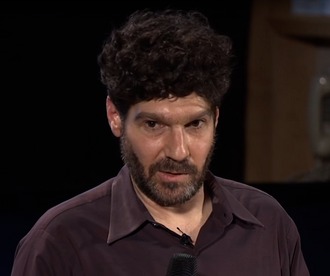
But I suspect that they will not because left-wing politics, even more than right-wing politics, is so based on grievance, and on acquiring status by displaying grievance. It’s not exactly Aristotle, but there’s something to work with there.Brooks has a problem in that he wants to write a funny book dunking on Dave Rubin and Jordan Peterson and a sincere left-wing internationalist manifesto. “As a result, I believe that the intellectual dark web is going to be perceived as rivals.”
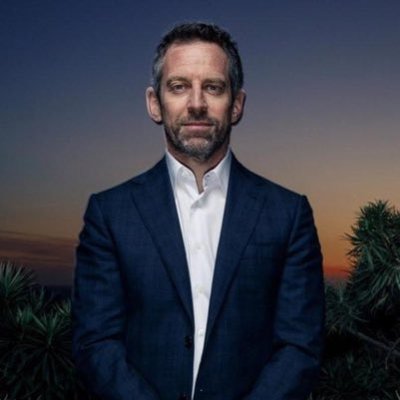
Allan Bloom kicked things off with his 1987 best seller The Closing of the American Mind, which argued that the influence of ’60s-era student, feminist, and Black Power movements led college students to reject traditional liberal arts curricula. Unlike the actual “dark web” of hidden online networks, this one requires no specialized software to be made accessible. This book examines the IDW’s history, philosophy, and impact, covering figures like Jordan Peterson, Sam Harris, and Elon Musk. Challenging restrictive intellectual and cultural orthodoxies, this group advocated for free speech and individual liberty. Outside of progressive academics and activists, arguably no group influenced public discourse as much as the Intellectual Dark Web.
We’re going to say that these ideas are better than these other ideas. I mean that a podcast, even a brilliant argument sustained over a number of years about the evils of critical race theory, for example, will not change the K-12 curriculum in a public school system. The first is that these are ultimately political problems.