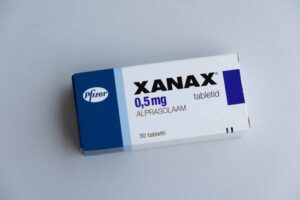
This enables healthcare providers to confidently prescribe and dispense generic drugs, promoting their utilization and market growth. Moreover, the reliance on generic drugs during drug shortages addresses immediate supply challenges and contributes to the growth of the generic drug market in the long term. Prescription drugs market is anticipated to grow at a noteworthy CAGR during the forecast period, driven by a strong emphasis on national health services and increasing demand for accessible therapies. On the basis of type, the prescription drugs market is segmented into branded and generic.
A generic drug is an exact chemical copy of a small-molecule, chemically synthesized brand-name drug. Forecasts vary, but a synthesized analysis suggests the market will grow from a baseline of approximately $450-$500 billion in the mid-2020s to over $700-$800 billion by the early 2030s, with a compound annual growth rate (CAGR) between 5% and 8%.1 To succeed in this evolving landscape, generic drug manufacturers must adopt a set of clear strategic imperatives that move beyond the traditional playbook. Without this investment in education and communication, even the most promising and cost-effective products may fail to achieve their full market potential. Physicians are the primary gatekeepers for prescription medicines, and their confidence is essential for the uptake of generics and biosimilars. A prime example is DrugPatentWatch, a service widely used across the industry to gain actionable insights into the pharmaceutical patent landscape.125 This platform serves as a comprehensive database and early warning system, enabling companies to make data-driven strategic decisions.122
What Is The Pharmaceutical Drugs Market Growth Forecast?
On the basis of distribution channel, the prescription drugs market is segmented into hospital pharmacy, retail pharmacy, online pharmacy, and others. On the basis of end-users, the prescription drugs market is segmented into hospitals, specialty clinics, homecare, and others. On the basis of route of administration, the prescription drugs market is segmented into oral, topical, parenteral, and others.
Market Segmentation
The emergence of fentanyl on North American street markets from 2014 onwards led to a shift of street drug use patterns. The 2025–2026 outpatient prescription drug trends are similar to those seen in 2024–2025 with the same top drivers, including diabetes and inflammatory conditions. The 2025–2026 projections for traditional drugs are similar to 2024–2025 estimates, boosted by new therapies, manufacturer price increases, and steady utilization gains in top categories, particularly diabetes.
The Teva-Allergan deal serves as a cautionary tale; while it expanded Teva’s portfolio, the massive debt incurred left the company financially vulnerable when its key branded product faced generic competition, highlighting the immense financial strain and integration challenges that can accompany large-scale acquisitions.115 The 2020 merger of Mylan and Upjohn to form Viatris is a prime example of a large-scale consolidation designed to create a global powerhouse with a diversified portfolio and expansive reach.117 However, M&A is not without significant risks. This strategic divergence signals the end of a monolithic “generic company” model. An analysis of the “Big Three”—Teva, Sandoz, and Viatris—reveals three distinct blueprints for future growth.115 The leading companies are not standing still; they are actively reshaping their business models to adapt to the industry’s evolving pressures and opportunities. Because expensive originator biologics are more likely to hit this cap, patients can sometimes end up paying less for the originator than for a lower-priced biosimilar, which serves as a major deterrent to switching.113 These combined challenges of quality crises, low trust, and a difficult pricing environment make Japan a uniquely complex market to navigate, where success depends as much on building a reputation for reliability and quality as it does on price.
Explore More High-quality Data On Related Topic
The U.S. FDA particularly approved these generic equivalents to improve drug competition and to also encourage the increasing adoption of these low-cost drug equivalents. An increasing number of key manufacturers are shifting their focus toward developing drugs to treat rare diseases. Moreover, rising R&D initiatives for the development and launch of COVID-19 treatment drugs by major players surged the demand for vaccines and orphan drugs among the population.
Generic Drugs Market Trends
Also, the raised adoption of technological advancements like telehealth and remote patient tracking enables healthcare providers to monitor patients’ progress and supplies support from home, with affordable features as well. As the rising geriatric population with chronic conditions, demand for hospital care and specialized medications, which are widely dispensed in hospital pharmacies. Also, they are offering a broad range of consumer-centric services like home healthcare, laboratory services, and specialty pharmacy services, to meet the developing needs of customers. By route of administration, the parenteral (injectable) segment is expected to grow fastest during the projected period.
Retail Pharmacies Segment Led In 2024
The market is projected to grow from USD 1,240.33 billion in 2024 to USD 2,151.63 billion by 2032, exhibiting a CAGR of 7.1% during the forecast period. Deepa Pandey is a focused and detail-oriented market research professional with growing expertise in the healthcare sector, delivering high-quality insights across therapeutic areas, diagnostics, biotechnology and healthcare services. Germany is facing major growth in the market, propelled by the rapid expansion of biologics and biosimilars, which are providing novel therapeutic approaches. With growing disposable income, especially among the middle class, people can afford highly expensive drugs.
The Prescriber’s Perspective: Balancing Cost, Efficacy, And Trust

Although it might be difficult, it is crucial to guarantee the quality and safety of pharmaceutical goods at every point in the supply chain. There are many parties involved in the manufacturing, distribution, and shipping of pharmaceuticals, making the supply chain complicated and heavily regulated. The field’s future is hinted at by Germany’s ambitious ambition to use whole-genome sequencing in regular healthcare, the emergence of mRNA vaccines, and next-generation treatments that use CRISPR technology. This reflects a strong CAGR of 27.01% during the forecast period from 2026 to 2035. One of the most tightly regulated industries, the pharmaceutical industry has consistently produced high-quality pharmaceutical goods for human use that have the intended pharmacotherapeutic effects for the treatment of a wide range of illnesses. Businesses that find, develop, produce, distribute, and sell pharmaceutical goods are referred to as pharmaceutical industries.
Conventional small molecules take around years to enter the market, from their discovery to market approval. The average medication cost of a heart patient accounts for thousands of dollars annually. According to the WHO, an estimated 17.9 million people die from cardiovascular disorders each year globally. However, unlike simple generics, biosimilars undergo extensive analysis and clinical trials to confirm that they have the same characteristics as the reference biologics. Patent expiration provides significant opportunities for generics manufacturers.
- AI and ML can also automate the manufacturing process of generic drugs, reducing manual errors.
- However, prescription drugs also stand to gain from e-pharmacy platforms through enhanced patient adherence programs and digital prescription services, allowing for seamless and efficient access to necessary medications.
- Many European countries utilize tendering systems to procure generic drugs, particularly for the hospital sector.
- On the other hand, generics are witnessing renewed growth, particularly after the expiration of patents for several high-revenue drugs like Revlimid and Tecfidera.
- The hospital pharmacy segment led the market with a share of 42.1% in 2024, due to centralized drug dispensing and institutional procurement.
By Product Type Analysis
Suspensions are often used to administer poorly water-soluble drugs that cannot be formulated as aqueous solutions. The tablets segment has generated highest revenue share in market in 2024. The market has grown even more owing to increasing consumer education and awareness for over-the-counter (OTC) products, as well as convenient access through pharmacies and retail stores. The increasing inclination towards self-care and healthcare trends, coupled with the empowerment of consumers to take charge of their health. With the increasing prevalence of such conditions, the demand from patients has increased due to unmet clinical needs and the desire for favorable therapy outcomes. The increasing number of people with diabetes, especially type 2 diabetes, and the growing need for effective drug treatments to manage the condition.
Product Type
- After a 0.4% contraction in 2024, pharmaceuticals output and sales in the EU and the UK are anticipated to grow by 1.9% in 2025 and 0.4% in 2026.
- The pharmaceutical industry in India grew by 7.8% in April 2025, with the supply of 20% of the world’s generic medicine.
- In the United States, generic drugs account for over 90% of all prescriptions filled, yet they represent only about 18% of total prescription drug spending.7 Similarly, in Europe, generics constitute approximately 70% of the medicine volume.15
- Furthermore, these companies maintain strong manufacturing capabilities and efficient supply chains, ensuring a steady and reliable supply of generic medications.
- The growing aging population and increasing cancer incidence among them and advancements in cancer treatments are fostering segment growth.
- Such a factor has assisted the growth of the US pharmaceutical market trends in the recent past and is expected to follow a similar trend during the forecast period.
The increasing availability of biosimilars is driving market competition while making biologics more accessible. In recent years, the country has witnessed a transformative shift toward personalized medicine, driven by genomics and AI-assisted drug development. While the U.S. maintains a premium pricing model for drugs, insurance schemes like Medicare and Medicaid, and recent policy pushes for drug pricing reforms, continue to shape the competitive dynamics. Additionally, there has been a growing trend towards digitalization and automation, which has led to increased efficiency and cost savings in the pharmaceutical supply chain.
For this study, Nova one advisor, Inc. has segmented the U.S. pharmaceutical market. Prescription medications dominate the U.S. pharmaceutical market due to the complexity and specialization of treatments, especially in chronic and life-threatening diseases. On the other hand, generics are witnessing renewed growth, particularly after the expiration of patents for several high-revenue drugs like Revlimid and Tecfidera. With an aging population, increasing prevalence of chronic diseases, and a steady demand for innovative therapies, the U.S. pharmaceutical landscape continues to evolve rapidly. In Asia, the Pharmaceuticals market has been growing rapidly, driven by an increasing demand for healthcare services and a rise in disposable income. Compared to the revenue generated by prescription drugs, OTC pharmaceuticals only play a minor role.
Although novel advanced technologies in drug delivery, including nanotechnology, microencapsulation, and 3D printing, are optimizing drug efficacy and bioavailability, which leads to the enhanced demand for drugs. Moreover, the boosting of healthcare expenditure and government commitments to universal healthcare assure a continued demand for pharmaceutical products. This segment is experiencing demand due to contributing factors such as, it is convenience, approachability, and reasonable cost. These are prescribed drugs, which are used in complex, chronic, and rare conditions like cancer, multiple sclerosis, rheumatoid arthritis, and other diseases.